
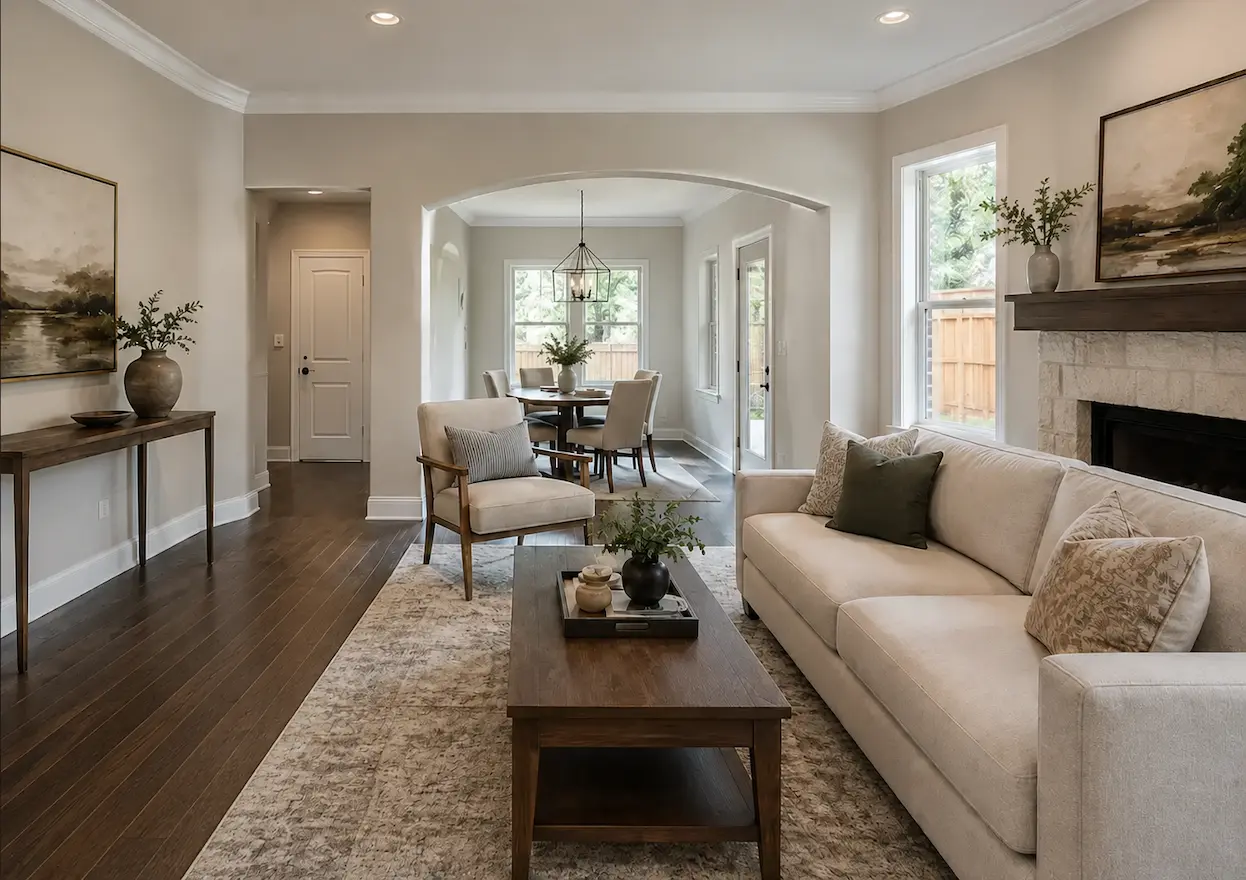
Interior remodeling often starts when the rooms still function, but no longer feel as clean, finished, or comfortable as they should. The walls may show old patches. Trim may look tired. Paint colors may no longer fit the light in the home. A room may feel updated in pieces, but not truly pulled together.
That is where painting becomes more than a final cosmetic step. The right paint plan can help a room feel calmer, brighter, cleaner, and more intentional. The wrong plan can make flaws more visible or leave the space feeling unfinished.
At Amour Remodeling DFW, we believe interior remodeling should begin with the real condition of the space. Before color is chosen, the walls, trim, transitions, repairs, lighting, and room purpose should be reviewed. A better finish starts before the first coat goes on.
Interior Remodeling Should Start With the Room’s Current Condition
Interior remodeling should begin by looking at what the room is telling you. Paint may be faded, but the deeper issue could be wall damage, uneven texture, trim gaps, nail holes, water stains, or old repairs that were never finished well.
A fresh color can improve the room, but it cannot hide every problem. In some cases, new paint makes flaws easier to see because the surface reflects light differently. That is why the condition of the walls matters before the project moves into color samples.
A good interior update starts with a walkthrough. Which walls need patching? Which corners are rough? Does the trim need caulk? Are there dents, cracks, or stains? Is the ceiling part of the scope? These answers help define the work clearly.
Room Repainting Works Better With a Clear Purpose
Room repainting should not begin only with the question of color. It should begin with how the room needs to feel and function. A bedroom may need calm. A hallway may need durability. A living room may need warmth. A home office may need a finish that feels clean without feeling cold.
Interior remodeling becomes easier when paint supports the room’s purpose. A high-traffic area needs different planning than a guest room. A kitchen-adjacent wall may need easier cleaning than a formal dining room. A room with limited light may need a color that helps the space feel open without becoming flat.
The best repainting decisions come from use, not only preference. Color matters, but daily life should guide the final choice.
Wall Preparation Shapes the Final Result
Wall preparation is one of the most important parts of an interior painting project. It is also one of the easiest parts to underestimate.
Before paint goes on, walls may need cleaning, sanding, patching, priming, caulking, texture matching, or stain blocking. These steps help the final coat look smoother and last longer. Skipping preparation may save time at first, but it can leave the room with visible flaws.
Interior remodeling should treat wall preparation as part of the finish, not as a separate task. Paint is only as good as the surface beneath it. When walls are repaired carefully, the color can do its job without fighting old damage.
The goal is not only a new color. The goal is a cleaner surface.
Trim Painting Can Change the Whole Room
Trim painting can have a bigger effect than homeowners expect. Baseboards, door frames, window casing, crown molding, and built-ins create the outlines of a room. If those details are yellowed, chipped, uneven, or mismatched, the whole space can feel less finished.
Painting trim can sharpen the room and make wall colors feel more intentional. It can also reveal whether the trim needs caulking, sanding, filling, or repair before the finish coat.
Interior remodeling should include trim in the early scope conversation. Homeowners should decide whether trim will stay the same color, become brighter, shift warmer, or create contrast with the walls. That decision affects the mood of the room.
A fresh wall with tired trim rarely feels complete.
Paint Color Should Follow Light and Layout
Paint color changes throughout the day. Morning light, afternoon sun, shaded rooms, artificial lighting, flooring, furniture, and nearby rooms all affect how a color reads.
That is why color should be tested in the actual room. A shade that looks soft in a store can feel too cool at home. A warm neutral can turn yellow under certain lighting. A dark color can feel rich in one space and heavy in another.
Interior remodeling benefits from slowing this decision down. Color should support the room’s light, not fight it. It should also connect with flooring, cabinetry, countertops, furniture, and trim.
A good color plan makes the room feel settled.
Interior Scope Should Be Defined Before Work Begins
Interior scope decides what the project actually includes. It may sound simple to say a room needs painting, but the details matter.
Will the ceiling be painted? Are doors included? Will trim be repaired or only coated? Does the project include closets, built-ins, stair rails, accent walls, drywall patches, caulking, or primer? Will furniture need to be moved? Are there rooms that should be phased?
The project can become stressful when the scope is vague. Homeowners may assume something is included, while the project plan covers only the walls. Clear scope protects expectations, timing, and budget.
The more detailed the scope is before work begins, the smoother the project usually feels.
Surface Problems Should Not Be Covered Too Quickly
Some wall issues need more than paint. Water stains, recurring cracks, peeling paint, soft drywall, or repeated bubbling may point to problems that should be understood first.
Painting over those issues too quickly can create a temporary improvement while the original problem remains. That may lead to more repair work later.
Interior remodeling should separate cosmetic wear from surface concerns that need attention. Small dents and nail holes are one thing. Moisture, movement, or damaged drywall is another. A careful review helps avoid treating a symptom as the full problem.
A room should not only look better on the day it is painted. It should stay better after regular use.
Finish Sheen Should Match the Room
Paint sheen affects durability, cleaning, and how visible imperfections become. Flat finishes can soften a wall, but may not clean as easily. Satin or eggshell finishes can work well in many living areas. Higher-sheen finishes may be useful for trim or high-contact areas, but can make wall flaws more noticeable.
The right finish depends on the room. Kids’ rooms, hallways, bathrooms, kitchens, and laundry areas may need more durability. Formal spaces may benefit from a softer look. Trim usually needs a finish that can handle contact and cleaning.
Interior remodeling should include finish sheen in the planning conversation. Color gets most of the attention, but sheen often affects how the room feels and performs.
A beautiful color can disappoint if the finish is wrong for the space.
Interior Painting Can Support a Larger Update
Interior painting is often part of a bigger change. New flooring, lighting, cabinetry, doors, built-ins, or hardware can all affect how paint should be planned.
If painting happens too early, other trades may damage finished surfaces. If it happens too late, the project may feel delayed or harder to coordinate. The right timing depends on what else is changing in the home.
This is where the interior work needs a clear sequence. Paint should support the larger update, not be squeezed in as an afterthought. When the order is right, the finished rooms feel cleaner and more connected.
Good sequencing reduces repeated touch-ups and unnecessary frustration.
Color Transitions Between Rooms Matter
A single room can look good on its own and still feel disconnected from the rest of the home. This often happens when each room is painted without considering the spaces nearby.
Open doorways, hallways, staircases, and shared sightlines make color transitions important. A bold color may work beautifully in one room, but it should not clash with the next space. Neutrals can also feel mismatched if undertones are not considered.
Interior remodeling should look at how rooms relate. The goal does not have to be one color everywhere. The goal is flow. A home can have variety while still feeling intentional.
Good color planning helps the home feel calmer as people move through it.
Small Paint Details Can Affect the Final Feel
Small details often decide whether the project feels professional. Clean cut lines, smooth corners, consistent trim finish, patched nail holes, caulked gaps, and even coverage all matter.
These details are especially visible near windows, doors, baseboards, shelves, cabinets, and staircases. A room may have the right color, but if the edges are messy, the finish can feel rushed.
Interior remodeling should respect those final details. Paint is visible every day. It sits in the background of every room, but it also frames the way the home feels.
A careful finish makes the room feel more complete without needing to announce itself.
Plan the Paint Work Before Choosing Final Colors
The strongest paint decisions happen after the scope is clear. Wall condition, trim needs, ceiling work, room use, lighting, finish sheen, and color transitions should all be reviewed before final colors are chosen.
Homeowners can review Amour Remodeling DFW page to understand how professional interior painting can support a cleaner, more polished home update. The right conversation should cover preparation, finish, room needs, and how the painting fits the broader project.
Interior remodeling becomes easier when color selection is not carrying the whole plan. Once the room is understood, the paint choices become more confident.
A better plan leads to a better finish.
Request an Interior Painting Estimate From Amour
Interior remodeling does not always require a full construction project. Sometimes the most meaningful update is a cleaner wall surface, sharper trim, better color, and a scope that makes the room feel cared for again.
At Amour Remodeling DFW, we help homeowners look at interior painting as part of the way a room works and feels. If your walls, trim, or interior finishes need attention, contact us to request an interior painting estimate from Amour before choosing colors or final scope.
FAQ
What is interior remodeling?
It is the process of improving interior spaces through updates such as paint, trim, wall preparation, finishes, layout details, or related room improvements.
Why does wall preparation matter before painting?
Wall preparation helps repair flaws, smooth surfaces, block stains, and create a better foundation for the final paint finish.
When does room repainting make sense?
Room repainting makes sense when color, wall condition, stains, fading, or worn finishes make a space feel dated or unfinished.
Should trim painting be included?
Trim painting should be considered when baseboards, casing, doors, or built-ins look worn, yellowed, chipped, or disconnected from the new wall color.
How do I choose the right paint finish?
Choose paint finish based on room use, cleaning needs, wall condition, light, and whether the surface is a wall, trim, door, or high-contact area.
How should I start an interior painting project?
Start by reviewing wall condition, trim needs, room use, color goals, finish sheen, scope, and whether other interior work should happen first.