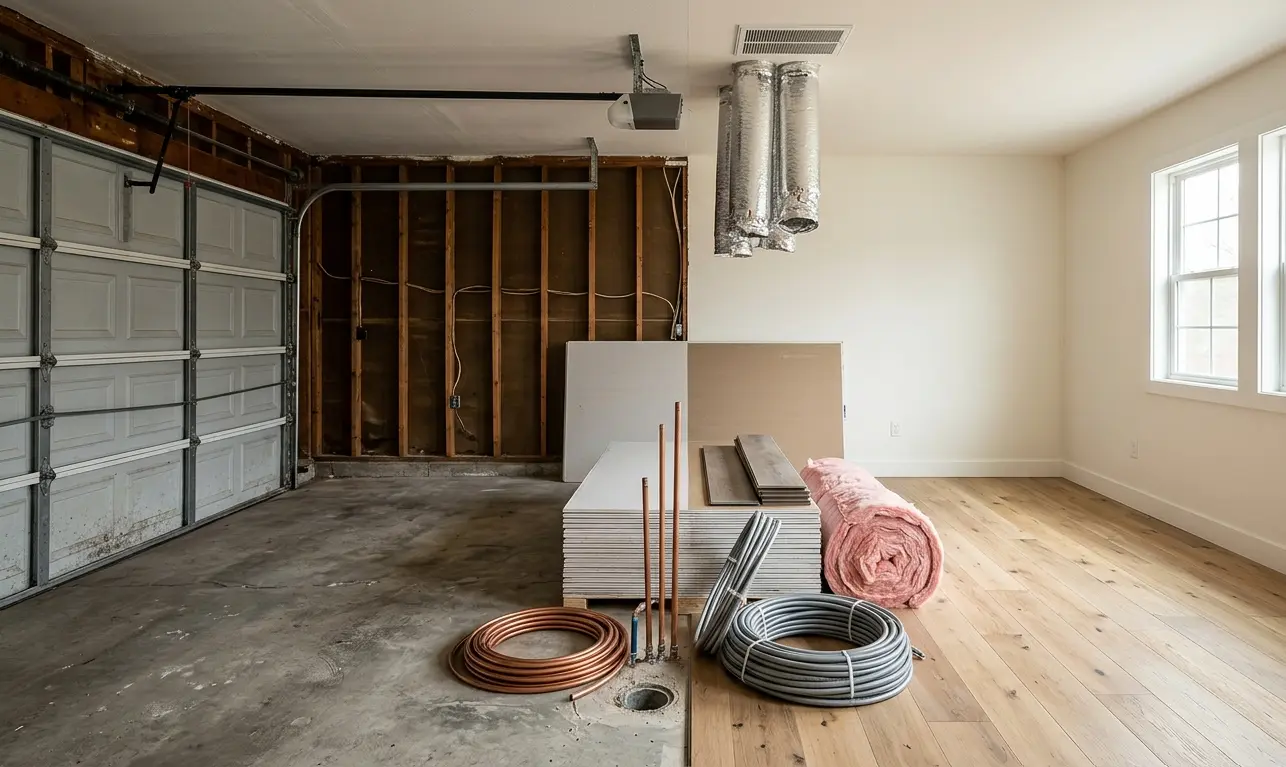
Garage conversion cost usually starts as a simple question and turns into a much bigger one. A homeowner sees underused square footage and wants to know what it would take to make that space livable. At first, the project can sound straightforward. The room already exists. The walls are there. The footprint is there. It seems like the hard part should already be done. At Amour Remodeling DFW, we know that is exactly where the misunderstanding usually begins.
A garage can absolutely become valuable living space. It can also become more involved than expected once comfort, layout, insulation, electrical work, HVAC, flooring, plumbing, and finish quality start entering the conversation. That is why we think the better question is not just “how much does it cost?” It is “what is shaping the cost, and what kind of result are we actually trying to create?”
That shift matters. Homeowners usually feel more confident when the price is tied to real project decisions, not a random number pulled from a search result.
Garage Conversion Cost Starts With the Kind of Room You Want
One of the biggest price differences comes from the type of room the garage is becoming.
If the goal is a simple finished flex space, the project may stay more manageable. If the goal is a bedroom, office, guest suite, gym, or living area with a stronger sense of finish, the work often becomes more layered. The moment the room needs to feel fully integrated with the rest of the house, expectations rise. So does the cost.
That is where garage conversion cost often begins to separate from what homeowners first imagined. A room that only needs cleaner walls, flooring, and lighting sits in a different category from a room that needs plumbing, a closet, HVAC upgrades, new windows, and a stronger level of sound and thermal comfort.
We usually tell homeowners to begin there. Not with the cheapest version of the idea, but with the most honest version of how the room is meant to function every day.
Garage Conversion Cost Changes Fast When Layout Work Gets Involved
A lot of people assume the garage already has the shape of a finished room. Sometimes that is partly true. A lot of the time, it is not.
Once layout changes begin, the garage conversion cost can move quickly. Removing or reframing the garage door wall, adding windows, changing access points, adjusting ceiling lines, or reshaping the entry into the home all push the project into a different level of complexity. The more the space has to be reworked to feel natural, the more labour and material start driving the final number.
This is one reason we try to keep the planning grounded early. A garage conversion that works with the space you already have usually stays more predictable. A garage conversion that fights the original structure often costs more because so much of the project goes into correcting awkward conditions before the finish work even begins.
The room should not just look finished at the end. It should feel like it belongs in the house.
Square Footage Matters, but It Is Not the Whole Story
Square footage does matter. Bigger spaces usually mean more framing, drywall, flooring, trim, paint, insulation, lighting, and labour. But homeowners often overestimate how much square footage alone explains the price.
The truth is that garage conversion cost is shaped just as much by what is inside the walls as by the size of the room itself. A smaller conversion with electrical upgrades, plumbing, HVAC work, and a higher finish level can easily cost more than a larger conversion with a simpler scope.
That is why we do not like giving homeowners a shallow per-square-foot answer and pretending it explains everything. It helps with rough direction, but not with the real decision. What matters more is how much work the space needs to become comfortable, usable, and visually aligned with the rest of the home.
That is also where the difference between price and value becomes clearer. The right project is not always the cheapest one. It is the one that makes the most sense for the way the home is actually used.
Insulation, HVAC, and Comfort Shape More of the Price Than People Expect
This is one of the biggest reasons garage conversions end up costing more than expected. Garages were not usually built to feel like the rest of the house.
They often need better insulation, better air sealing, a stronger ceiling strategy, upgraded wall assemblies, and a real heating and cooling plan. Without that work, the room may technically exist, but it will not feel comfortable enough to use the way homeowners imagined.
That is where garage conversion cost becomes a livability question, not just a construction question. A room that is too hot in summer, too cold in winter, or too disconnected from the home’s mechanical systems usually ends up feeling temporary no matter how clean the finishes look.
At Amour Remodeling DFW, we think this is one of the most important budget conversations in the whole project. If the room is going to be part of everyday life, comfort cannot be treated like a secondary upgrade.
Plumbing Can Shift the Budget Into a Different Category
The moment a conversion includes plumbing, the project usually changes tier.
A garage turned into a home office or flex room may stay within a more moderate range. A garage turned into a guest suite, bathroom-equipped room, laundry area, or semi-independent living space usually costs more because plumbing adds layers of work that do not exist in a dry conversion.
That is why garage conversion cost often looks very different from one household to another. It is not just about whether the room looks nice. It is about whether water supply, drain lines, venting, fixture placement, and code-related work now have to be part of the plan.
This is also where homeowners sometimes start comparing the project to a garage renovation cost or even to the cost of building a garage somewhere else on the property. That comparison can be useful, but only if it is honest about function. Converting living space and building garage space answer two very different needs.
Finish Level Has a Bigger Impact Than Most Homeowners Expect
Not all finished rooms are finished to the same level.
A basic conversion may use more standard materials and simpler detailing. A more integrated conversion may need flooring that matches the home, stronger trim work, custom storage, upgraded doors, cleaner lighting, better sound control, and a visual finish that makes the room feel original to the house.
That is where garage conversion cost becomes strongly tied to expectations. The more seamless the result needs to feel, the more the finish package matters. That does not mean every project has to be high-end. It means the desired result should be priced honestly.
We usually see homeowners relax once this part becomes clearer. They stop chasing one magic number and start understanding the relationship between scope, quality, and outcome. That makes the budget conversation much more productive.
Comparing Garage Conversion Cost to Build a Garage Cost
A lot of homeowners ask whether converting the garage still makes sense once the price starts climbing. That is a fair question.
When a project becomes more involved, people naturally begin comparing garage conversion cost to build a garage cost or the broader cost of building a garage from scratch. That comparison matters, but it should be made carefully. Building a garage gives you garage space. Converting a garage gives you living space. The numbers may overlap in some cases, but the value of each choice depends on what the home is missing.
If the household truly needs another livable room, converting the garage may still be the smarter path even if the investment is higher than expected. If the garage function is still important and the living need is flexible, then building new space elsewhere may deserve a closer look.
At Amour Remodeling DFW, we think this is one of the healthiest parts of the planning process. Sometimes a project becomes more realistic once the homeowner sees what they are actually choosing between.
The Best Cost Conversations Start Before the Design Gets Too Far
A lot of stress comes from falling in love with the finished room before the scope is clear.
Once that happens, every cost feels like bad news. But most of those costs were not random. They were built into the type of room being imagined from the start. That is why we prefer to begin with a cleaner sequence. Read the space first. Define the role of the room. Identify the mechanical, structural, and finish requirements. Then shape the budget around a real scope.
That is the part that helps homeowners understand garage conversion cost without feeling blindsided by it. The price stops feeling like a moving target and starts feeling like a response to real decisions.
At Amour Remodeling DFW, we do not think cost guides are most useful when they promise the lowest number. We think they are most useful when they help homeowners see what is driving the final price before the project moves too far to correct the plan.
When the Price Makes More Sense, the Project Usually Does Too
The garage conversion itself is only half the decision. The other half is whether the finished room will solve something meaningful in the home.
That is why garage conversion cost should always be tied back to function. What pressure is this room relieving? What part of daily life does it improve? How often will it be used? Will it feel integrated enough to stay valuable over time?
Those questions matter because a conversion that genuinely improves the way the house works usually feels easier to justify. A conversion that adds square footage without adding much real function tends to feel expensive faster, even if the number itself is lower.
At Amour Remodeling DFW, we think the strongest cost decisions happen when clarity comes before momentum. Once the space, the scope, and the role of the room are understood, the budget stops feeling like guesswork and starts feeling like planning.
FAQ
What factors increase garage conversion cost the most?
Plumbing, electrical upgrades, HVAC installation, insulation, and structural modifications drive costs highest. Adding bathrooms, changing layouts, and finish quality significantly impact price. Dallas garage conversions typically range $25,000 to $75,000 depending on scope. Utility work often accounts for largest cost increases.
Is garage conversion cost determined mainly by square footage?
No. Size matters, but utility upgrades (plumbing, electrical, HVAC), insulation quality, bathroom additions, and finish level often determine final cost as much as square footage. Two garages same size can cost differently based on existing infrastructure and desired comfort level.
How much does adding a bathroom increase garage conversion cost?
Adding plumbing for bathroom typically pushes project into higher cost tier ($40,000 to $75,000 range). Bathroom requires new water lines, drain lines, ventilation, and fixtures. Plumbing work is often the single biggest cost driver in garage conversions.
What’s the difference between garage renovation cost and garage conversion cost?
Renovation typically means updating existing space (paint, flooring, fixtures). Conversion means transforming garage into livable square footage with utilities, insulation, climate control, and code compliance. Conversion costs significantly more because it requires structural and system upgrades.
Should I compare garage conversion cost to building a new garage?
Yes, but compare function honestly. Conversion creates living space ($25k-$75k). Building detached garage costs $7,500 to $28,200. Choose conversion if you need residential space; choose new garage if you need vehicle storage. Cost comparison depends on actual need.
Does Amour Remodeling DFW provide free cost estimates for garage conversions?
Yes. Free quotes help homeowners understand scope, budget range, and what drives costs before moving forward. Contact us for detailed estimate based on your specific garage, utilities, and goals.