A garage adu conversion usually starts with a simple thought. There is square footage sitting on the property that could be doing much more. Maybe the goal is extra living space for family. Maybe it is a guest suite, a private work area, or a long-term housing option that feels more useful than a garage full of storage bins. The opportunity feels obvious. The planning usually does not.
That is where homeowners tend to get pulled in too many directions at once. The floor plan sounds important. The plumbing sounds important. Privacy sounds important. Access, windows, insulation, budget, permits, all of it starts feeling urgent at the same time.
At Amour Remodeling DFW, we think the project gets easier when those decisions stop competing and start falling into the right order. Our contact page invites homeowners to discuss the project and request a free quote, which fits the way we like to work. Start with clarity, then move into the build.
Garage ADU Conversion Starts With the End Use
The first decision in a garage adu conversion is not the flooring, the finishes, or the style. It is the purpose of the space. A guest suite needs different things than a rental-style setup. A private office with a bathroom needs something different than a fully independent living unit. The room cannot be planned well until the long-term use is honest.
This is one of the places where homeowners save themselves the most stress. Once the future use is clear, the rest of the project starts sorting itself out. The layout becomes easier to judge. Utility needs make more sense. Privacy decisions feel less random. Even the budget becomes easier to read because the project stops drifting between several different goals.
At Amour Remodeling DFW, we think this is where confidence begins. A remodel feels much more controlled when the homeowner knows what the converted space is supposed to do every day, not just how they want it to look when it is finished.
Garage ADU Conversion Needs a Layout Before It Needs Finishes
A garage adu conversion can look polished and still feel awkward if the layout is not doing its job. The room may have enough square footage, but that does not automatically mean it will live well. Placement matters. Entry matters. Bathroom location matters. Storage matters. Light matters. The room has to move properly before it starts trying to impress.
This is why we would rather talk through the floor plan early than spend too much time on finish selections too soon. When the layout is right, the project starts feeling believable. When the layout is weak, even expensive upgrades can leave the space feeling improvised.
That matters even more when the homeowner wants to convert garage to living space in a way that feels permanent and comfortable rather than temporary. A strong plan should make the room feel like it belongs to the property, not like something was simply added because there was extra square footage available.
Utilities Change the Project Faster Than Most People Expect
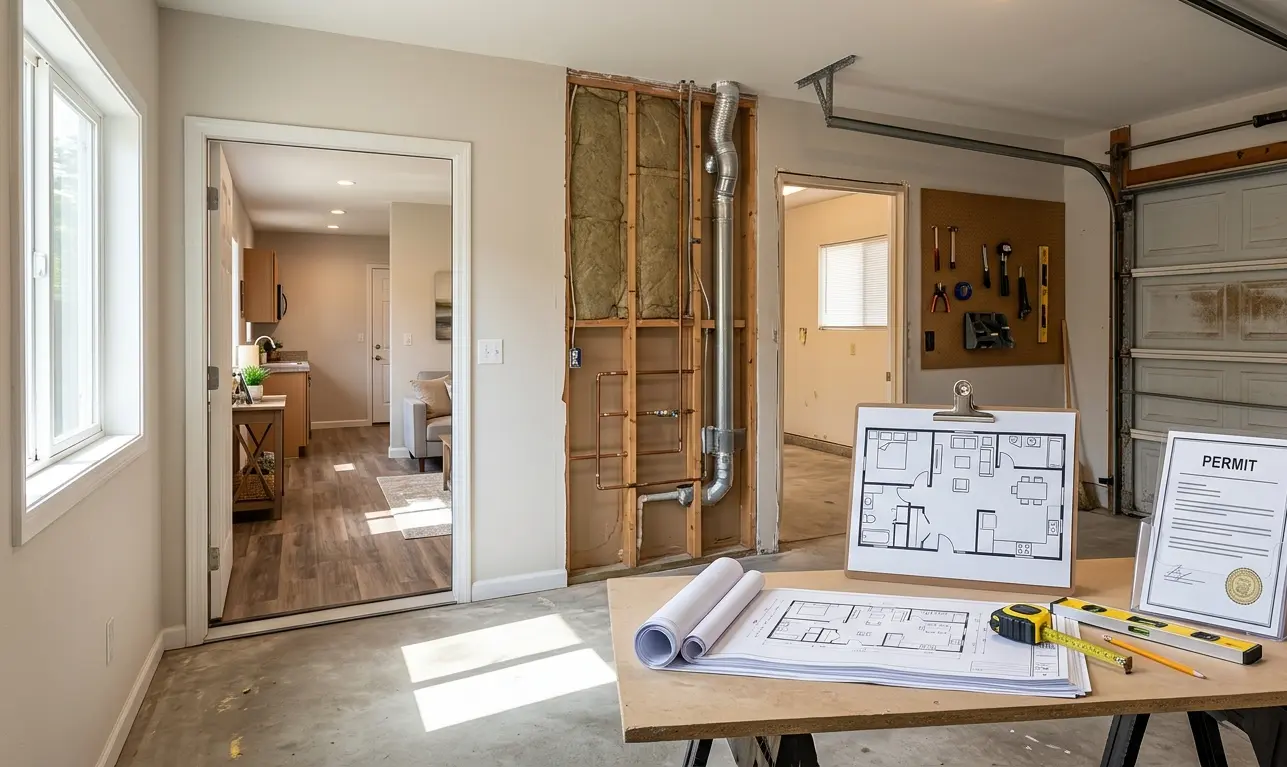
A lot of garage conversion budgets tighten up when utility decisions are left too late. Plumbing, electrical, HVAC, drainage, and insulation all affect what the room can become. If the project needs a bathroom, kitchenette, laundry area, or separate climate control, that needs to be part of the thinking early.
This is not just a comfort issue. It is also a code and permitting issue. The City of Dallas garage conversion checklist says converting a residential garage requires a building permit and notes that code-compliant garage conversions may require new electrical receptacles, insulation in new and existing walls and ceilings, and smoke detectors throughout the house and converted garage.
Fort Worth’s residential permitting pages also make clear that residential permits and zoning review are part of the local process and provide zoning and permit resources for homeowners and contractors.
That is one reason we think utility planning deserves much more attention than homeowners usually want to give it at the start. A beautiful room still has to function as a real living space. The earlier those requirements are faced, the more realistic the project becomes.
Privacy and Access Decide Whether the Space Really Works
This is one of the most overlooked parts of a garage adu conversion. Homeowners often focus first on the inside of the new space. They spend less time thinking about how people reach it, how private it feels, and how it will sit alongside the main home once daily life begins.
That matters because privacy is not only about walls. It is about movement. A converted garage that forces every person through the main house may not feel independent enough for the intended use. A unit with poor separation from the rest of the property may feel more exposed than expected. Access also changes how natural the project feels over time.
At Amour Remodeling DFW, we think this is one of the strongest reasons to plan the whole property, not just the garage interior. A well-planned ADU should feel usable from day one and still make sense later, once routines settle in and the space starts functioning as part of everyday life.
Garage ADU Conversion Planning Should Face Permits and Code Early
Homeowners do not usually begin with permits because permits are not the exciting part. Still, this is one of the clearest places where early planning protects the whole project.
The Dallas garage conversion checklist is direct that a building permit is required for converting a residential garage into another use. Fort Worth’s residential permitting information similarly points homeowners and contractors toward the permit process, residential building permit application paths, and zoning tools to determine what rules apply to the property.
That tells us something important even at a planning-guide level. A garage adu conversion should not be treated like a simple finish upgrade. The room is changing use, which means approvals, code compliance, and local review can become part of the project much earlier than many homeowners expect. We think that reality is easier to handle when it is acknowledged upfront instead of discovered halfway through design choices.
Long-Term Property Use Should Shape the Whole Decision
A garage conversion should not only answer today’s need. It should make sense for the property over time. That is one reason we do not like starting with finishes or surface-level inspiration. The stronger question is what role this space is meant to play in the life of the house.
Some homeowners want flexibility for visiting family. Others want a more independent living area. Others are trying to create something that feels like a real home extension, not an improvised room at the edge of the lot. That long-term purpose changes how the project should be read. It influences privacy, entry, utility scope, budget, and layout decisions all at once.
This is also where the right garage conversion contractors become easier to identify. A good team should help the homeowner think through use, code, comfort, and property fit, not just quote the work based on a rough idea and leave the rest blurry.
The Best First Step Is a Clearer Order of Decisions
Most homeowner stress around this kind of remodel comes from trying to solve everything at once. The room does not need every answer on day one. It does need the right first answers.
A garage adu conversion usually gets easier when the order becomes clearer. Start with the long-term use. Then the layout. Then the utility reality. Then access and privacy. Then code and permitting. Then the finish layer that makes the room feel complete. That order does not make the project smaller. It makes it more readable.
At Amour Remodeling DFW, that is how we think a planning guide should help. Not by overloading the homeowner with technical noise, but by making the early decisions feel more grounded. Once the purpose is clear and the structure of the project makes sense, the rest of the remodel usually starts feeling much more possible.
FAQ
Do I need a permit for garage conversion in Dallas or Fort Worth?
Yes. Dallas and Fort Worth both require building permits for residential garage conversions. Dallas permit costs typically range from $800 to $2,000. You will also need to follow local ADU ordinances, which include specific setback and size limits. Building permits are required for any structural, electrical, or plumbing modifications.
What should I plan first when converting a garage into living space?
Start by defining long-term use, then evaluate your existing utilities, property layout, and local zoning requirements. Plumbing, electrical, HVAC, and insulation upgrades frequently affect project scope and cost. Review Dallas ADU ordinances early to avoid costly changes mid-project.
Why are utilities and code compliance so important in garage conversions?
Electrical, plumbing, HVAC, insulation, and code requirements directly impact project cost and timeline. Upgrading these systems early prevents expensive changes later and ensures your conversion meets Dallas building codes. Estimated garage conversion costs range from $25,000 to $75,000, with utilities often being the largest variable.
What factors make a garage conversion feel like a real living space?
Proper layout, complete utilities (plumbing, electrical, HVAC), adequate insulation, climate control, natural light, and direct access all contribute. Matching your design to long-term use ensures the space functions as genuine living quarters, not just an addition.
Does Amour Remodeling DFW offer free consultations for garage conversions?
Yes. We provide free quotes and consultations to discuss your garage ADU conversion goals, budget, and timeline. Contact us today to start planning your project with local Dallas experts.