To convert garage to living space usually starts with a very practical thought. The house still works, but not as comfortably as it used to. Someone needs a quieter place to work. A child needs more privacy. Guests are coming more often. The home feels short on useful space, even if the square footage is technically already there. At that point, the garage stops looking like storage or overflow and starts looking like possibility.
That is also where homeowners usually start feeling pulled in two directions at once. The space seems promising, but the process feels uncertain. Will it actually feel like part of the house? Will it be comfortable year-round? Will the project stay manageable, or will it turn into something heavier than expected? At Amour Remodeling DFW, we think that is exactly why this kind of project needs better planning at the front end.
The real question is not only whether you can convert garage to living space. It is whether the room can become something that feels natural, comfortable, and worth the investment once daily life moves into it.
Convert Garage to Living Space Starts With the Need, Not the Finish
A lot of projects get harder because the homeowner starts with the room they want to see instead of the problem they need to solve.
That sounds small, but it changes the whole path. A garage office, guest room, second living area, gym, studio, or private suite can all sound appealing. The problem is that these are not the same project. The more clearly the room’s purpose is defined, the easier it becomes to make smart decisions about layout, utilities, access, finish level, and budget.
We usually tell homeowners to begin with one honest question: what pressure inside the house is this room supposed to relieve? That answer matters more than mood boards at first. A room that solves a real daily problem tends to justify itself much more clearly. A room that only sounds useful in theory often becomes expensive faster than expected.
That is part of why this project fits into broader home renovation services so naturally. The strongest remodels are not the ones that simply add square footage. They are the ones that make the home function better.
Why Convert Garage to Living Space Plans Need an Honest Space Review
The garage may already be enclosed, but that does not mean it is already ready to live in.
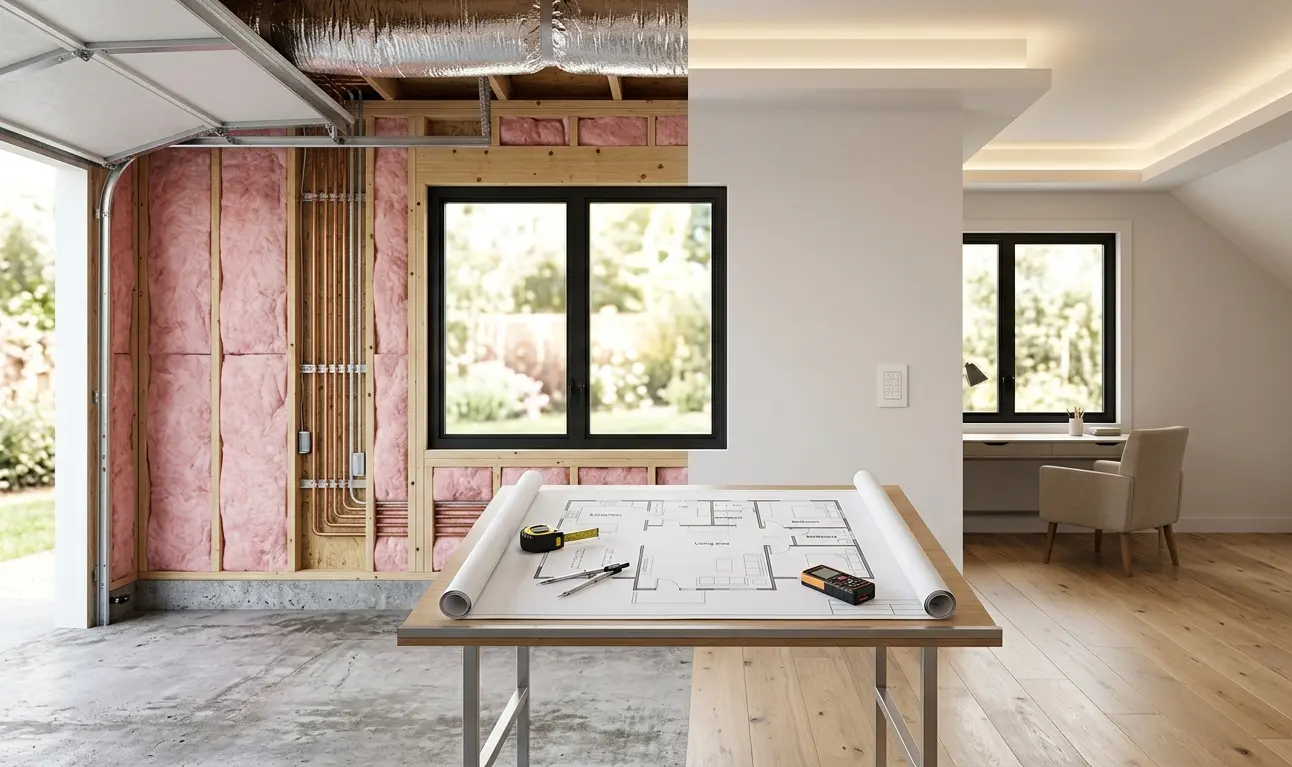
This is one of the biggest misunderstandings around plans to convert garage to living space. Homeowners often assume the hard part is mostly done because the footprint already exists. In reality, the existing shell is only the starting point. The room still has to be evaluated honestly. Ceiling height, slab condition, wall depth, natural light, garage door replacement strategy, existing openings, and the relationship to the rest of the home all matter early.
A space can look large enough and still feel awkward once the practical layers come in. The room may need more insulation than expected. The entry into the house may feel wrong. The window placement may be too weak for a livable room. The slab may create comfort or flooring decisions that did not seem obvious at first.
At Amour Remodeling DFW, we see this as a planning issue much more than a design issue. Homeowners usually feel better once the space is read clearly for what it is, not just for what they hope it could become.
Utilities Change the Project Earlier Than Most People Expect
This is where the scope usually starts becoming real.
A garage that only needs basic finish work sits in one category. A garage that needs serious electrical updates, HVAC integration, insulation upgrades, plumbing, drainage planning, or a bathroom sits in another. The moment the room needs to function like real interior living space, utility decisions start shaping the entire project.
That is why the choice to convert garage to living space often becomes more layered than people expected. The room may not need plumbing at all. Or it may need enough plumbing that the project begins moving closer to a more complete garage ADU conversion conversation. The same is true for heating and cooling. A room that technically exists but feels too hot, too cold, too sealed off, or too difficult to condition will never settle naturally into the rhythm of the home.
We think this is one of the most important planning steps in the whole process. Comfort is not a finishing detail. It is one of the things that determines whether the room will actually get used the way the homeowner imagined.
Comfort and Code Need to Lead Before Design Does
Homeowners often want the exciting part first. Flooring ideas. Paint colours. Built-ins. Lighting mood. Furniture layout.
We understand that. The finish layer is easier to picture. But before any of that, the room has to work as real living space. That means the planning has to account for insulation, ventilation, temperature control, electrical capacity, egress where needed, and local requirements that affect whether the space can be used the way the homeowner intends.
This is why we do not think the smartest process starts with “how do we make this garage look finished?” The stronger question is “what has to be true for this room to feel safe, comfortable, and fully integrated into daily life?” Once that is answered well, the design layer starts making more sense.
This is also where experienced garage conversion contractors separate themselves. A good contractor is not only there to price the finish. They should help read the space honestly enough to keep the project from drifting into expensive corrections later.
Convert Garage to Living Space Projects Need Better Access and Layout Decisions
One of the easiest ways for a garage conversion to feel wrong is poor flow.
The room might look good in photos and still feel disconnected in daily use. That usually happens because access was treated as a secondary issue. How the room connects to the house matters. Whether the entry feels natural matters. Whether the layout supports privacy, noise control, furniture use, and everyday movement matters.
When homeowners decide to convert garage to living space, they are not just finishing a box. They are changing the way the house moves. A room that feels cut off, too exposed, too public, or too awkward to reach may still count as added square footage, but it does not always improve the home in a meaningful way.
This is especially true when the project edges toward a guest suite or garage ADU conversion idea. The more independent the room needs to feel, the more the entry sequence, bathroom planning, storage, and privacy questions begin to matter. That does not make the project a bad idea. It means the layout deserves more respect early.
The Best Projects Solve Daily Pressure Without Making the House Stranger
A good remodel earns its place in the home. It does not just exist. It improves something.
That is the standard we think matters most when homeowners want to convert garage to living space. The finished room should reduce pressure somewhere else in the house. It should support work, rest, privacy, guests, family life, or flexibility in a way that feels believable once the project is done. If it does that, the investment usually makes much more sense.
This is also why some conversions feel successful and others feel like compromises. The successful ones do not just look better. They fit the house better. They support the way people actually live. They do not force the rest of the home into a strange new pattern just to justify the added square footage.
At Amour Remodeling DFW, that is how we think about this category of work. Not as a trend project. Not as leftover space that only needs decorating. As a real decision about how the home should function next.
The Smartest Convert Garage to Living Space Decisions Start Earlier Than People Think
Most of the stress in this type of remodel does not come from the last stage. It starts much earlier, when the room idea is exciting but the conditions have not been read clearly yet.
We think the better order is simple. Start with the actual problem the room should solve. Read the garage honestly. Understand the utility demands. Check comfort, access, and layout. Then move into design with a room that already makes sense on paper and in daily use.
That is how a plan to convert garage to living space stops feeling like guesswork and starts feeling like a real project. Once the space, the role, and the limits are clear, the rest of the conversation gets easier. The budget gets easier to trust. The design gets easier to shape. The final room has a much better chance of feeling like it truly belongs.
At Amour Remodeling DFW, we offer free quotes because we know these projects go better when homeowners start with clarity, not just momentum. When the planning is right, the room does more than add space. It helps the whole house feel more complete.
FAQ
What should homeowners evaluate first before converting garage to living space?
Start with intended use (bedroom, office, guest suite), existing structure and foundation condition, utility access (plumbing, electrical, HVAC), natural light and ventilation, direct access options, and local code requirements. Assessment determines feasibility and cost before permits.
Does converting garage to living space always require HVAC installation?
Not always, but most livable rooms need proper heating and cooling plan. Without HVAC, space stays uncomfortable seasonally. Budget for climate control upgrades if converting to bedroom or year-round living area. Insulation also critical for comfort and energy efficiency.
How is garage ADU conversion different from standard garage conversion?
ADU (Accessory Dwelling Unit) conversion creates separate residential unit needing independent utilities, private entrance, kitchen, and bathroom. Standard conversion often creates bedroom or office connected to main house. ADU requires more infrastructure and Dallas permits. Both demand proper planning.
Why do experienced garage conversion contractors make such a difference?
Early mistakes in layout, utility planning, and code compliance cost thousands to fix. Contractors familiar with Dallas code prevent permit delays, structural issues, and comfort problems. They identify what impacts cost most and build realistic timelines before work starts.
Can converting a garage to living space feel integrated with your home?
Yes. Proper planning for comfort (HVAC, insulation), seamless access, matching finishes, and thoughtful layout make converted space feel like natural extension. Focus on how space functions daily and how it connects to existing home.
Does Amour Remodeling DFW offer free consultations to convert garage to living space?
Yes. Free quotes help homeowners understand conversion scope, feasibility, utilities needed, and realistic costs. Contact us to discuss your garage conversion goals with Dallas experts experienced in livable transformations.