
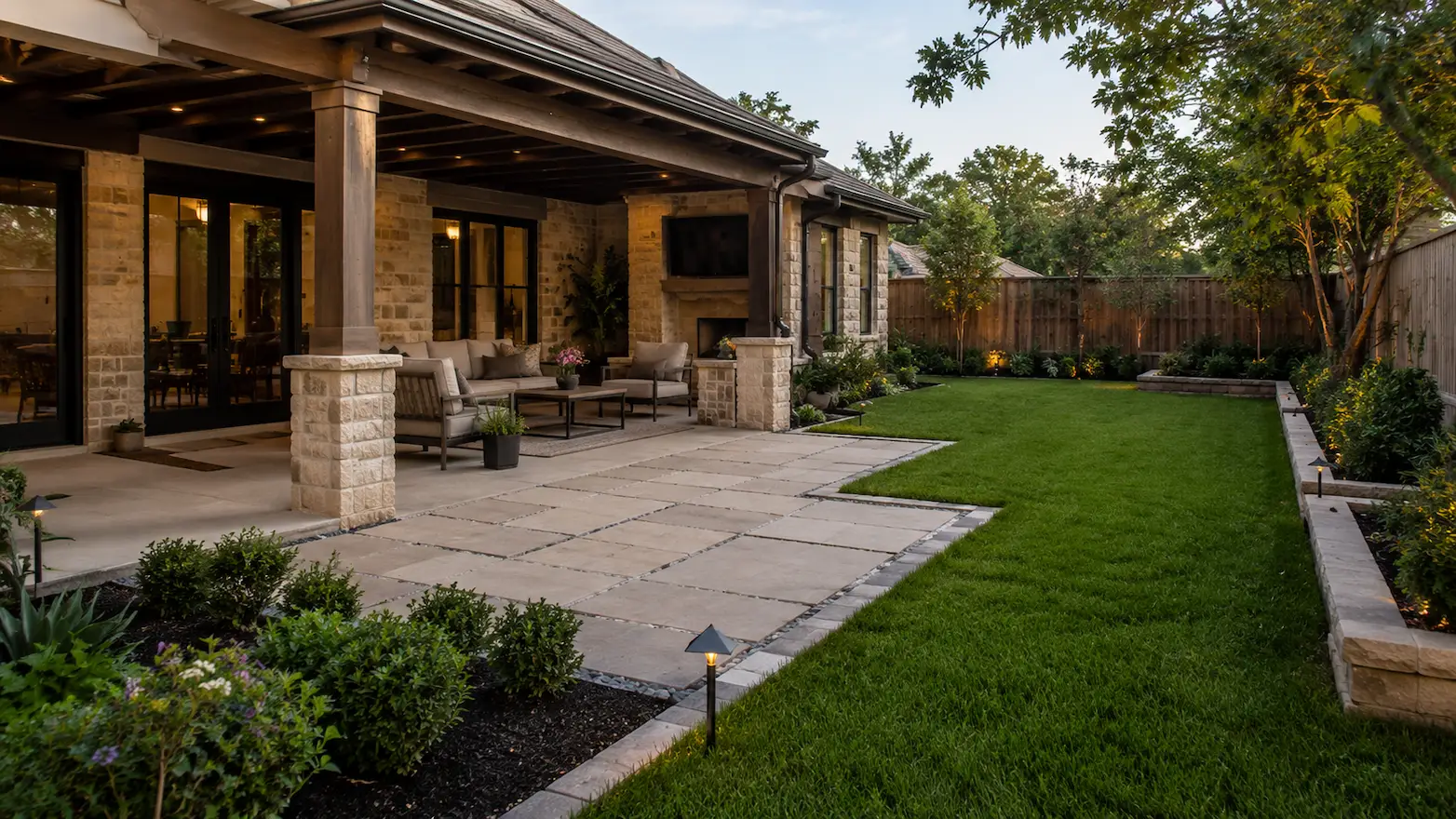
Backyard renovation often starts with a simple realization: the yard is there, but the family is not really using it. The patio may feel too exposed. The grass may never recover in certain spots. The furniture may sit unused for most of the year. After a heavy rain, water may collect where people are supposed to walk. During summer, the sun may make the space feel impossible by late afternoon.
For many homeowners, the issue is not that the backyard lacks potential. It is that the space has never been planned around real life. A yard can be large and still feel awkward. It can be newly landscaped and still drain poorly. It can have a patio and still not feel comfortable enough for dinner outside, morning coffee, kids, pets, or guests.
At Amour Remodeling DFW, backyard renovation is approached as a full outdoor living plan, not a cosmetic refresh. The work starts with how the household actually uses the yard, how the property handles North Texas weather, where water moves, where shade is missing, and how the outdoor space should connect back to the home.
Start With the Life You Want Outside
A strong backyard renovation does not begin with a paver color, a furniture set, or a saved photo. It begins with the way the yard should function. Some homeowners want a quiet place to sit at the end of the day. Others want an outdoor dining area, a grilling zone, space for kids to play, a cleaner transition from the kitchen, or a backyard that can handle guests without feeling crowded.
Those details matter because every outdoor space has to make choices. A yard built for entertaining may need more open circulation, better evening lighting, and a patio large enough for people to gather comfortably. A yard built for a young family may need more visible play space, safer walking paths, and materials that can handle daily use. A low-maintenance yard may need more hardscape, climate-appropriate planting, and better drainage before anything decorative is added.
The most successful backyard renovation is not always the biggest one. It is the one that removes the friction that kept the family from using the space in the first place.
The Existing Yard Tells You What the Plan Needs
Before design decisions become serious, the yard needs to be read carefully. Every property has its own conditions, and those conditions shape what the finished space can become. Soil, slope, shade, tree roots, drainage, fence lines, utility access, existing concrete, and sun exposure can all affect the outcome.
This is where many quick backyard updates fall short. They cover the visible problem without correcting what caused it. A new patio over poor drainage may look good at first, then create puddling, shifting, or water movement toward the house. Fresh planting in compacted soil may struggle after the first season. A seating area placed without shade may look perfect in spring and sit empty through most of the summer.
A backyard renovation should work with the property, not fight it. Mature trees may become part of the shade strategy. Existing concrete may be removed, repaired, or expanded depending on its condition. A fence line may influence privacy planning. A slope may need grading before the yard can support a patio or lawn area properly.
The early walkthrough is where the project becomes honest. It shows what can stay, what needs correction, and what should be planned before finishes are selected.
Patio Planning Shapes the Whole Yard
The patio usually becomes the heart of a backyard renovation because it determines where people sit, cook, move, and gather. If the patio is too small, the space feels cramped immediately. If it is too large, it may dominate the yard and leave little room for planting, play, or softness. If it sits in the wrong location, it may look good but remain underused.
Good patio planning considers how the space connects to the home. A patio that flows naturally from the kitchen or living area tends to get used more often than one placed far from the daily path. Door locations, step heights, sightlines, and furniture layout all matter. The space should feel like an extension of the home, not like a separate destination that requires extra effort.
Material choice also changes the experience. DFW heat is not gentle on outdoor surfaces. Some darker materials can become uncomfortable underfoot or hold heat longer into the evening. Some finishes need more maintenance than homeowners expect. Others may offer durability but require careful installation to handle soil movement, drainage, and weather.
A patio should be attractive, but it also needs to earn its place in the daily rhythm of the home.
Drainage Has to Be Solved Before the Yard Looks Finished
Drainage is rarely the most exciting part of a backyard renovation, but it may be the most important. Water problems do not disappear because a yard looks better. In many cases, adding hardscape, raised beds, or new features without correcting drainage can make those problems worse.
A yard that holds standing water after rain is already telling you something. Water near the foundation, soggy lawn areas, erosion near fence lines, muddy paths, and runoff that crosses the patio all point to conditions that should be addressed before the final design moves forward.
In DFW, storms can be heavy enough to test a yard quickly. A good plan should consider where water enters the property, how it moves across the grade, where downspouts discharge, and whether the soil absorbs or traps moisture. Sometimes the solution is regrading. Sometimes it may involve drains, swales, improved downspout routing, permeable areas, or a different hardscape layout.
A backyard renovation that ignores drainage is not finished. It is just waiting for the next storm to reveal the problem again.
Shade Changes Whether the Backyard Gets Used
A DFW backyard without shade can become a space people admire from inside the house instead of a space they actually use. The yard may feel open and clean in early spring, but by June the afternoon sun can make the patio uncomfortable, especially on west-facing exposures.
Shade should be planned early because it affects layout, materials, seating, planting, and how long the space remains comfortable during the day. A covered patio creates more dependable protection. A pergola can soften sunlight while keeping the space visually open. Trees can bring natural shade and character, but they need time, root space, and maintenance. Screens, curtains, or partial shade structures can help control glare and privacy in specific zones.
The right choice depends on how the family uses the yard. A dining area needs different shade than a lounge space. A grill station needs comfort without trapping smoke. A play area may need filtered shade instead of a full roof. The goal is not to cover every square foot. The goal is to create outdoor rooms that remain usable during real Texas weather.
Outdoor Living Should Feel Natural, Not Overbuilt
Outdoor living design can easily become overcomplicated. A homeowner may feel pressure to add an outdoor kitchen, fire feature, lounge area, dining table, TV wall, pergola, and elaborate landscaping all at once. Those features can be useful in the right home, but they are not automatically the answer.
The better question is what the family will actually use. A simple covered seating area may change daily life more than a large outdoor kitchen. A shaded breakfast spot may get more use than a fire pit in a climate where much of the year is warm. A clean patio with good lighting and comfortable furniture may be enough to turn an ignored yard into a favorite part of the home.
A backyard renovation should support real habits. Morning coffee, weekend grilling, kids playing after school, quiet evenings, pets moving in and out, or neighbors coming over for casual gatherings all create different design priorities. When the layout reflects those patterns, the yard feels natural instead of staged.
The best outdoor living spaces do not feel like they were copied from a showroom. They feel like they belong to the house and the people who live there.
Lighting Makes the Yard Work After Sunset
Lighting is one of the easiest details to underestimate. Without it, even a well-designed backyard can stop functioning once the sun goes down. In DFW, evenings are often the most comfortable time to be outside, especially outside the hottest part of summer. A yard without lighting loses some of its best hours.
Good lighting does more than make the space visible. It creates mood, improves safety, helps people move through the yard, and makes outdoor dining or seating feel more intentional. A patio may need soft overhead lighting. Steps and pathways may need low lighting for safer movement. A grilling area may need task lighting. Trees, walls, or planting beds may benefit from subtle accent lighting.
Electrical planning should happen before finished surfaces go in. Outlets, fans, speakers, outdoor kitchens, heaters, TVs, and lighting zones all require coordination. Adding power later can be more expensive and may disturb finished hardscape or landscaping.
A backyard renovation that includes lighting from the beginning usually feels more complete and gets used more often.
Privacy Can Make the Difference Between Looking Nice and Feeling Comfortable
A backyard can be beautiful and still feel uncomfortable if it lacks privacy. Many DFW neighborhoods have homes close enough that patios, windows, fences, and second-story views affect how relaxed the space feels.
Privacy does not always require a tall fence. Sometimes it comes from the placement of a seating area, a row of planting, a pergola, a screen, a masonry feature, or a shift in the patio layout. A thoughtful plan blocks the specific view that feels exposed instead of closing off the whole yard.
Noise also plays a role. Road sounds, neighboring patios, HVAC units, pool equipment, and dogs can change how peaceful the backyard feels. Planting, fencing, water features, and layout can help soften some of that noise when planned intentionally.
A good backyard renovation considers the emotional side of the space. People use outdoor areas more when they feel protected, comfortable, and able to relax without feeling watched.
Landscaping Should Make the Yard Easier to Enjoy
Landscaping is not just the finishing touch. It shapes shade, privacy, maintenance, color, softness, and how the hardscape settles into the yard. But planting needs to make sense for DFW weather and the homeowner’s maintenance tolerance.
Some plants look great at installation and struggle once summer heat arrives. Others grow too large for the space, require more water than expected, or drop debris onto patios and walkways. A yard that becomes too demanding will eventually lose the sense of ease the renovation was supposed to create.
A strong planting plan supports the design instead of competing with it. Trees can build shade over time. Shrubs can create privacy. Low planting can soften patio edges. Climate-adapted selections can help reduce maintenance stress. Lawn areas can remain where they serve a real purpose instead of being kept only by habit.
The right landscaping helps the yard feel finished without making the homeowner feel trapped in constant upkeep.
Budget Clarity Comes From Scope, Not Guesswork
Backyard renovation costs vary because yards vary. A small patio update is different from a full outdoor living plan with drainage correction, grading, shade structure, lighting, landscaping, and utility work. Online estimates rarely capture the real conditions of a specific property.
A trustworthy budget begins with scope. Drainage, grading, structural needs, and safe transitions should be understood before decorative choices take over the conversation. If the yard needs correction underneath the surface, that work should not be treated like an optional upgrade. It is the part that protects everything installed afterward.
Some features can be phased. Furniture, extra planting, expanded lighting, or certain finish upgrades may be added later if needed. But foundation-level work, drainage planning, patio structure, and electrical rough-in are harder to change once construction is complete.
The clearer the scope is before work begins, the easier it is for homeowners to make confident decisions.
Sequencing Protects the Finished Space
A backyard renovation is not only about what gets built. It is also about when each piece happens. The order of construction can protect the finished work or create avoidable problems.
Grading and drainage should happen before patios and planting. Electrical rough-in should happen before hardscape is completed. Heavy equipment access should be considered before delicate landscape areas are installed. Shade structures may need footings or framing details coordinated before the final patio finish is set.
DFW weather also affects sequencing. Rain can delay grading, soil work, and concrete. Extreme heat can influence work conditions and planting windows. A realistic schedule helps homeowners prepare for disruption and understand why certain phases cannot be rushed.
Good sequencing is not just a contractor detail. It is part of building a yard that holds up.
The Best Backyard Renovation Starts Before Finishes
A backyard renovation works best when function leads and finishes follow. Paver color, furniture, lighting style, and plant texture all matter, but they should come after the bigger decisions about drainage, shade, patio placement, privacy, movement, and maintenance.
The goal is not only a yard that looks good on the day it is finished. The goal is a yard that still works after storms, summer heat, family use, pets, guests, and changing routines. A well-planned backyard gives the home more usable space and makes the transition between indoors and outdoors feel easier.
For DFW homeowners, that kind of result takes more than a quick update. It takes a plan built around the property, the weather, and the way the household actually lives.
At Amour Remodeling DFW, we help homeowners turn underused yards into outdoor spaces that feel practical, comfortable, and complete. If your yard needs more than another temporary fix, contact Amour Remodeling DFW to start a backyard renovation plan built around drainage, patio planning, shade, lighting, landscaping, and real outdoor living.
FAQ
What is a backyard renovation?
A backyard renovation improves the yard’s layout, drainage, patio, shade, lighting, landscaping, and outdoor living function so the space works better.
Where should backyard renovation planning start?
It should start with how the family uses the yard, followed by a review of drainage, grading, sun exposure, soil, and access.
Why does drainage matter in a backyard renovation?
Poor drainage can damage patios, landscaping, lawn areas, and foundations. It should be corrected before new finishes are installed.
How does patio planning affect the rest of the yard?
The patio often anchors seating, cooking, movement, and outdoor living, so its size and placement shape the entire design.
Does DFW weather change backyard design?
Yes. Heat, storms, sun exposure, drainage, and planting conditions should all be considered when planning an outdoor space in North Texas.
Can Amour Remodeling DFW help plan the full backyard?
Yes. Amour Remodeling DFW can help plan drainage, patios, shade, lighting, landscaping, and outdoor living design together.