An attic conversion usually starts with a quiet realization. The house still works, but not as easily as it used to. A child needs more privacy. Someone needs a place to work. Family life has changed, and the rooms that once felt enough now feel tighter around the edges. At that point, the attic starts looking different. It stops feeling like leftover square footage and starts feeling like possibility.
That is where a lot of homeowners get pulled in two directions at once. The space feels promising, but it also feels uncertain. Will it really work as living space? Will it feel comfortable or improvised? Will the project stay manageable, or will it open up more than expected? At Amour Remodeling DFW, we think that is exactly why this kind of project needs a better first conversation.
The question is not only whether the attic can be finished. It is whether it should be, and whether it can become a room that genuinely belongs to the home. Our site already frames our work around home remodeling, home additions, and garage conversions, with free quotes available through our contact page. That fits the way we think about decisions like this. Start with clarity, then move forward with a plan that makes sense.
Attic Conversion Starts With the Space You Actually Have
A lot of attic projects become confusing because the homeowner starts with the room they want instead of the structure they have. That is understandable. It is easy to picture an extra bedroom, a quiet office, or a flexible retreat. It is harder to look at the attic honestly and ask whether the shape, access, and construction of the space support that plan.
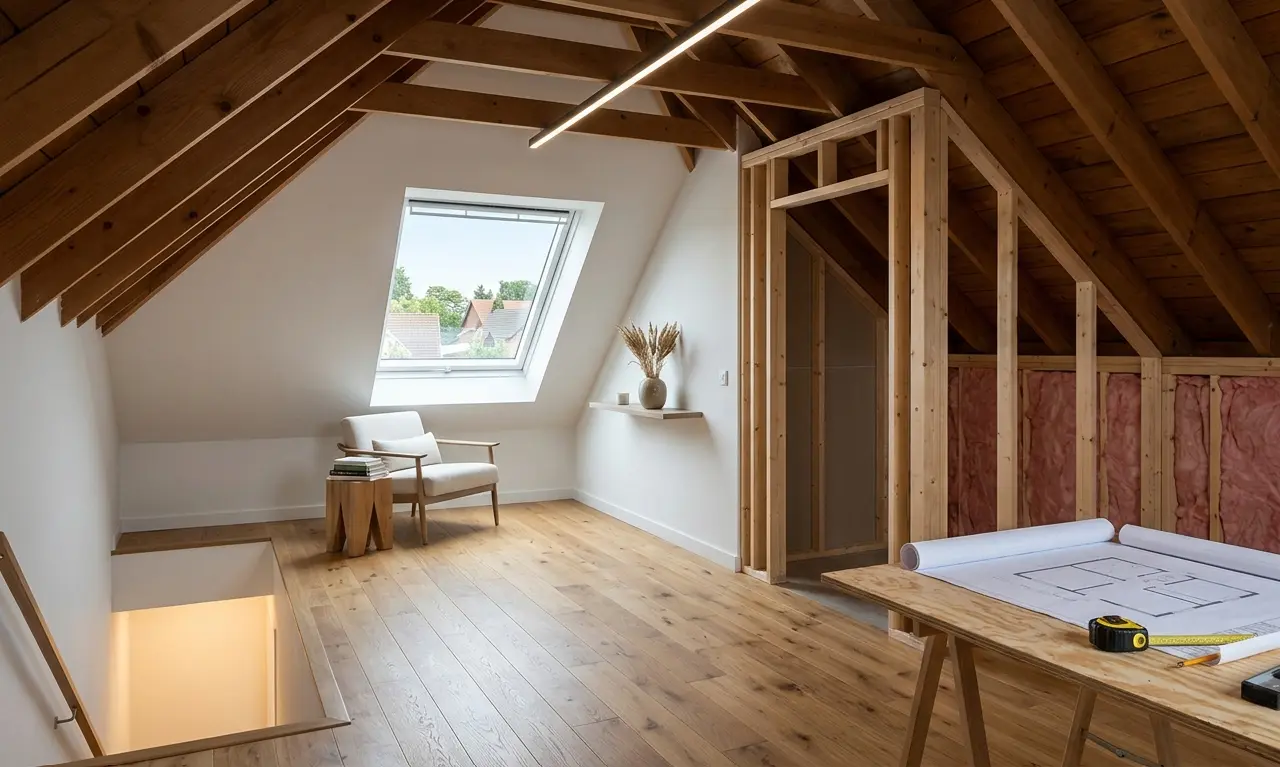
That is why we think an attic conversion should begin with a straightforward question: what can this area realistically become without forcing the house into an awkward solution? An attic that looks large enough from the floor below may still feel limited once ceiling slope, headroom, stairs, insulation, and structural conditions come into the conversation. That does not make the project a bad idea. It just means the value of the project depends on whether the room can function well when it is finished.
At Amour Remodeling DFW, we see that as a planning issue more than a design issue. Homeowners usually do better when the first step is reading the existing space clearly. The room should be able to support the way it will be used. If that fit is weak, the finish layer will not rescue it later.
Why Attic Conversion Plans Need Structure and Access Questions Early
This is where a lot of projects either settle into a realistic path or start drifting. Access matters. Structure matters. The way people will reach the room matters. The way the room ties into the rest of the home matters. If those questions stay blurry too long, the project tends to feel harder later.
Permitting guidance helps explain why these issues deserve attention early. The City of Dallas says a residential permit is required for construction, renovation, or major repairs and explains that permits help ensure projects meet safety codes and building standards. Fort Worth’s residential permitting page says permits are required for work that changes, moves, or repairs walls, floors, ceilings, windows, doors, electrical, mechanical, or plumbing systems.
That does not mean every attic project becomes complicated in the same way. It means homeowners should treat the space like a real remodeling project, not like storage that simply needs paint and flooring. At Amour Remodeling DFW, we think the stronger question is not “how do we make this attic look finished?” It is “what has to be true for this room to feel safe, comfortable, and natural as part of the house?” That is usually where the right planning begins.
An Attic Conversion Should Make Daily Life Easier, Not Stranger
A good remodel earns its place in the home. It does not just add square footage. It makes the house feel easier to live in. That is especially true with an attic.
An attic conversion only becomes worth it when the finished room helps the home solve a real need without making daily movement more awkward. A room that feels too disconnected, too cramped, too hard to heat and cool, or too compromised by the roofline may still look good in photos and still feel wrong in use. That is why we think the project should always be measured against real daily life. Will this room support privacy? Will it feel comfortable enough for regular use? Will it actually reduce pressure elsewhere in the house?
This is also where a lot of attic conversions separate into two categories. Some become real living space. Others remain rooms that technically exist but never fully settle into the rhythm of the house. The difference usually comes from planning decisions made much earlier than homeowners expect.
Attic Room Ideas Matter Less Than Long-Term Fit at First
Homeowners often start with the most visible idea. A guest suite. A teen retreat. A reading room. A playroom. A small office. Even attic bedroom ideas begin sounding exciting once the extra space starts to feel possible.
We understand that. The future room is the easiest part to imagine. It still should not be the first part to lead. Before the style of the room comes the reality of the room. Can the attic become living space that feels calm, useful, and properly integrated into the house? Can the project support insulation, access, lighting, ventilation, and comfort in a way that makes the space feel complete rather than adapted?
At Amour Remodeling DFW, we think homeowners usually feel more confident when the planning stays grounded in that order. The room idea matters. The long-term fit matters more first. Once the space proves itself, the design choices usually become much easier to trust.
When an Attic Conversion Makes More Sense Than Moving
Sometimes the best reason for an attic conversion is not design at all. It is staying in a home that already works in every way except one. The neighborhood fits. The family routines fit. The location still makes sense. The problem is simply that the current footprint is beginning to feel tight.
That is one reason attic projects can become so meaningful for growing homes. The added room is not only about extra square footage. It is about reducing pressure without asking the household to leave a property that still feels right in every other way.
Our own site already presents remodeling, home additions, and larger home improvements as ways to make the home fit better over time. That broader mindset applies here too. Sometimes the smartest move is not to go looking for another house. Sometimes it is to use the one you already have more intelligently.
That is also why we think homeowners should compare this decision against the home’s longer-term use, not just the immediate need. If the attic can become a room that stays relevant as life changes, the project usually makes more sense.
The Best Attic Conversion Decisions Start Before the Design Boards
A lot of homeowner stress comes from trying to solve the whole project in one burst of excitement. The room idea arrives first, and the practical questions rush in right behind it. That is where the process starts feeling heavier than it should.
We think the better order is simpler. First, understand the space. Then evaluate access, structure, and livability. Then ask what role the room is meant to play in the home over time. After that, the design conversation starts feeling much more grounded. The project stops being “can we make this look good?” and becomes “can we make this truly work?”
That is how we think an attic conversion should be approached at Amour Remodeling DFW. Not as a trend project. Not as a rushed answer to crowding. As a real decision about whether the home has the right conditions for one more useful, comfortable room. When that answer is yes, the project can become one of the most meaningful ways to help a growing home feel like it fits again.
FAQ
When does an attic conversion make the most sense?
Attic conversion works best when home needs extra living space, attic has adequate headroom, structural support exists, and access can be properly engineered. Evaluate whether attic can support insulation, HVAC, electrical upgrades, and safe stair access. Dallas homes often qualify if joists and framing allow livable conditions.
What should homeowners evaluate first in an attic conversion?
Start with headroom (minimum 7 feet), structural integrity of joists and beams, existing insulation, ventilation, electrical capacity, and stair access. Assess climate control needs, moisture issues, and how room would function daily. These factors determine feasibility and conversion costs before permits.
Does an attic remodel usually need permits in Dallas and Fort Worth?
Yes. Dallas and Fort Worth require permits for most attic conversions involving structural changes, electrical work, new stairs, windows, or HVAC installation. Permit costs and requirements vary by scope. Early contractor consultation clarifies permit pathway and affects project timeline.
Can an attic become a real bedroom or office space?
Yes, if space meets code: adequate headroom, proper egress windows for bedrooms, insulation for comfort, electrical capacity, and HVAC reach. Attic conversions work best for home offices, guest bedrooms, or studios when structural and safety requirements align with Dallas building codes.
Does Amour Remodeling DFW provide free attic conversion quotes?
Yes. We offer free consultations to assess attic potential, structural needs, permit requirements, and realistic costs. Contact us to discuss your attic conversion project with Dallas experts experienced in code compliance and livable design.