Attic conversion cost usually becomes a serious question once the space starts feeling possible. A homeowner looks upstairs and sees more than storage. Maybe it could become an office, a guest room, a teen retreat, a playroom, or a quieter place to work. The idea feels useful because the house already has the space. The harder part is understanding what it really takes to turn that space into a room that feels finished, safe, and comfortable.
That is where attic projects can feel confusing. One attic may need mostly access, insulation, electrical work, and finishes. Another may need structural reinforcement, a better stair layout, HVAC planning, and more extensive code review. Two spaces can look similar at first and still land in very different budget ranges once the practical details come into view.
At Amour Remodeling DFW, we think the best cost conversation starts before the design gets too detailed. The question is not only “How much will this attic conversion cost?” It is “What has to be true for this attic to become real living space?” When that answer is clear, the budget becomes much easier to understand.
Attic Conversion Cost Starts With the Space You Already Have
A lot of homeowners begin with the room they want. That is natural. It is easier to imagine a finished bedroom, a bright office, or a calm studio than it is to study ceiling height, framing, access, and mechanical needs.
Still, attic conversion cost starts with the attic as it exists today. The shape of the roof, the usable floor area, the slope of the ceiling, the framing, the current access point, and the condition of the insulation all influence the project before finishes ever enter the conversation.
This is why attic conversions should not be priced like simple room makeovers. The attic may already be inside the home, but that does not automatically make it ready for daily use. A real conversion needs to feel like part of the house, not like storage with flooring and paint.
At Amour Remodeling DFW, we see this as the first filter. The existing space either supports the plan, needs adjustment, or asks for a different approach. That early read can protect the budget from surprises later.
Stairs Can Change the Budget More Than Homeowners Expect
Access is one of the biggest attic cost factors because it changes how the room connects to daily life. A pull-down ladder may work for storage, but it does not work for a real bedroom, office, or regular living space.
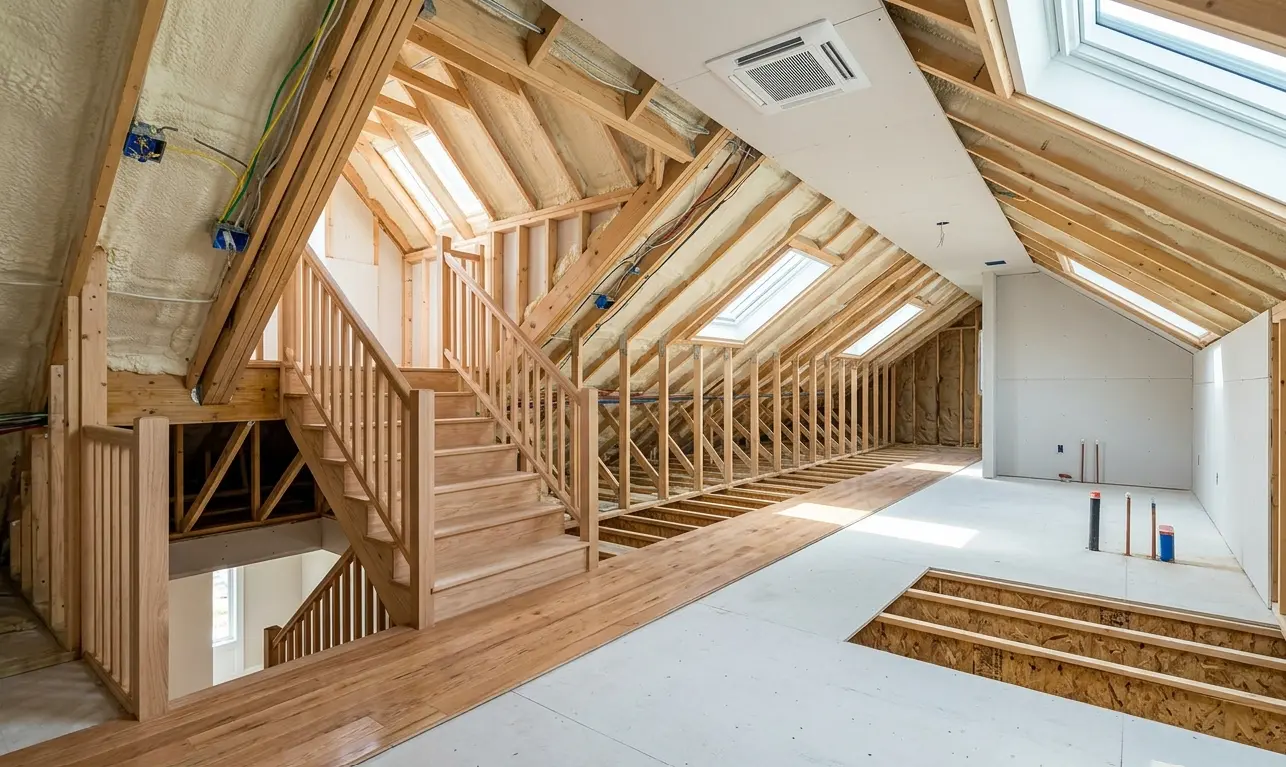
A proper staircase needs room. It needs safe placement. It needs to feel natural within the existing floor plan. That can affect walls, hallways, landings, and nearby rooms. Sometimes the cost is not only the staircase itself. It is the way the home has to adjust around it.
This is where attic conversion cost becomes more than a square-foot question. If the access is already close to workable, the project may stay more contained. If the stairs require major layout changes, the budget can grow quickly.
Good attic planning should ask early: how will people reach this room every day? If the answer feels awkward, the finished space may feel awkward too.
Structure Determines Whether the Attic Can Carry the Plan
Some attics were built for storage, not living. That matters.
A finished attic may need to support flooring, furniture, people, built-ins, lighting, and sometimes plumbing or heavier finish materials. If the existing framing was not designed for that use, structural work may become part of the budget.
This does not automatically make the project a bad idea. It simply means the attic should be evaluated before homeowners build expectations around a number. Structural reinforcement can be one of the clearest reasons one attic conversion cost differs from another.
The best version of the project does not force the house to accept a room it cannot support. It studies what is there first, then builds a plan that respects the home’s structure. That is where the room has a better chance of feeling permanent instead of improvised.
Insulation, Ventilation, and Comfort Are Not Optional Details
An attic can look beautiful and still fail as living space if it is too hot, too cold, too stuffy, or too hard to condition. Comfort is one of the biggest differences between a finished attic people use and one they avoid.
Insulation matters because attic spaces are close to the roofline. Ventilation matters because the space needs to breathe properly. HVAC planning matters because the room needs stable temperature control, especially in the DFW climate.
This is why attic conversion cost should include comfort planning from the beginning. If heating and cooling are treated as afterthoughts, the room may technically be finished but still feel uncomfortable for daily life.
A strong attic conversion should feel calm in August and usable in winter. That level of comfort usually comes from decisions made before drywall, paint, flooring, or furniture.
Electrical Work Shapes How Useful the Room Becomes
A real attic room needs more than one light and a few outlets. It needs lighting that fits the use of the space. It needs outlets where people actually need them. It may need dedicated circuits, switches, ceiling fans, recessed lighting, data access, or wiring for a home office setup.
This is another place where attic conversion cost depends on the role of the room. A simple storage upgrade has different needs from a bedroom. A work-from-home office has different needs from a playroom. A guest suite has different needs from a reading nook.
Electrical planning also affects how finished the space feels. Poor lighting can make even a well-built attic feel like an afterthought. Thoughtful lighting helps the room feel intentional, comfortable, and connected to the rest of the house.
Plumbing Can Move the Project Into a Different Cost Category
Not every attic conversion needs plumbing. Many homeowners want a bedroom, office, media room, or flexible living area without adding a bathroom. Those projects are often simpler than attic plans that include a full bath or wet bar.
Once plumbing enters the conversation, the budget can shift. The location of existing water and drain lines matters. The route through the home matters. The structural impact matters. Venting, fixtures, waterproofing, and finish selections also add layers.
That is why homeowners comparing attic conversion cost should separate “finished room” from “finished suite.” A room and a suite may sound close in conversation, but they can behave very differently inside the budget.
This is also where comparing attic work to home extension cost can be helpful. Adding square footage outward often brings foundation and exterior envelope costs. Converting an attic may avoid some of that, but plumbing, structure, and access can still make the project significant.
Permits and Code Questions Should Come Early
A finished attic is not just a design project. It is a livability project. That means permits, safety, access, electrical work, mechanical systems, and structural changes may need to be reviewed before construction begins.
Homeowners sometimes hope the attic will be simpler because the space already exists. Sometimes it is. Sometimes it is not. The important point is that code and permit questions should not be left until the end.
When attic conversion cost is discussed early, permitting should be part of the conversation. Not as a scare tactic. As a way to keep the project realistic, safe, and easier to manage.
At Amour Remodeling DFW, we think this is part of responsible planning. The goal is not just to create a room that looks finished. The goal is to create a room that belongs in the home and can be used with confidence.
Finish Level Can Quietly Stretch the Budget
Finishes are the part homeowners usually enjoy most. Flooring, paint, trim, lighting fixtures, built-ins, doors, hardware, and storage details make the room feel personal. They also influence cost.
A basic finish level may keep the project more contained. A higher-end finish package can make the room feel more integrated with the rest of the home, but it will also raise the budget. Custom millwork, upgraded flooring, specialty lighting, premium windows, and built-in storage can all change the final number.
This is where attic conversion cost needs a balanced conversation. The goal is not to choose the cheapest version by default. The goal is to choose finishes that make sense for how the room will be used.
A quiet office may not need the same finish plan as a guest suite. A child’s playroom may not need the same upgrades as a primary retreat. The use should guide the investment.
Loft Conversion Cost Comparisons Can Be Helpful, but Not Perfect
Homeowners sometimes search for loft conversion cost to understand attic pricing. That can be useful, especially when comparing how upper-level unused space gets converted into living area. Still, the terms are not always identical in every market or every home.
A loft conversion may involve an open upper space, while attic conversions often start with enclosed, unfinished, or partially accessible roof space. The existing structure, access, ceiling height, insulation, and mechanical conditions can be very different.
That is why general cost comparisons only go so far. A better estimate comes from looking at the actual home. What exists now? What needs to change? What role will the room play? What level of comfort and finish does the homeowner expect?
The more specific those answers become, the more useful the budget conversation becomes.
Attic Conversions Should Be Compared to Moving or Adding On
An attic conversion is not always the cheapest way to gain space, but it can be one of the most meaningful when the house already works in other ways.
If the neighborhood fits, the school route works, the commute makes sense, and the home still feels right, converting the attic can be a practical alternative to moving. It may also be worth comparing against home extension cost, especially if the homeowner needs more usable space but wants to avoid expanding the footprint.
That comparison should be realistic. An attic conversion still has costs. Stairs, structure, insulation, HVAC, electrical work, permits, and finishes all matter. But if the finished room solves a real need and helps the household stay in a home they already like, the value can be more than square footage.
At Amour Remodeling DFW, we think this is where the decision becomes more personal. The right project is not always the biggest one. It is the one that helps the home fit better.
The Best Budget Conversations Start Before the Room Is Designed
A lot of attic stress comes from designing the dream room before understanding the project conditions. Once the idea feels emotionally finished, practical realities can feel like setbacks.
The better order is simpler. First, understand the attic. Then evaluate access, structure, insulation, HVAC, electrical work, permits, and daily use. After that, the design conversation becomes much more grounded.
That is how attic conversion cost becomes easier to trust. The number is not based on a vague idea of finishing space. It is based on what the home actually needs to turn the attic into a usable room.
At Amour Remodeling DFW, we believe this kind of planning gives homeowners more confidence. It helps them see where the money goes, what matters most, and whether the project fits the way their family will live.
Attic Conversion Cost Is Really About Making the Space Work
The strongest attic conversions do more than add a room. They reduce pressure inside the home. They give someone privacy, quiet, flexibility, or breathing room. They make the house feel more useful without asking the family to leave a place that still works.
That only happens when the budget is built around the right questions. What does the space need structurally? How will people reach it? Will it feel comfortable year-round? Does the electrical plan support real use? Are permits and safety part of the plan? Do the finishes match the role of the room?
When those questions are answered early, attic conversion cost becomes less mysterious. It becomes a clearer investment in whether the home can support one more room that genuinely belongs.
If you are considering attic conversions in the DFW area, Amour Remodeling DFW can help you look at the space with more clarity before you commit. Start with the attic you have, the room you need, and a plan that makes the budget easier to understand.
FAQ
What factors increase attic conversion cost the most?
Structural work (reinforced joists), new stair installation, HVAC extension, insulation upgrades, electrical rewiring, and permits drive costs highest. Plumbing addition (if bathroom included) significantly increases expense. Finish quality and ceiling height modifications also impact final price. Dallas attic conversions typically range $20,000 to $60,000 depending on scope.
Is attic conversion cost less than building a home addition?
Sometimes. Attic conversion may avoid foundation and exterior work, but stair installation, structural reinforcement, HVAC extension, and code compliance still create significant costs. Home additions have different cost drivers. Compare actual scope, not just square footage, to determine which costs more.
How much does adding new stairs increase attic conversion cost?
Safe permanent stair installation often ranks among highest cost factors in attic conversion. Stairs require structural reinforcement, framing, materials, and building code compliance. Budgeting $3,000 to $10,000 for quality stairs is typical. Poor access planning creates expensive problems later.
What’s the difference between attic conversion cost and loft conversion cost?
Terms overlap, but costs differ based on existing structure, ceiling height, access options, HVAC reach, and local code requirements. Loft conversions may have different stair needs or insulation challenges. Both require structural assessment before accurate pricing. Dallas requirements apply to both.
Why get a quote before designing your attic conversion?
Early quote clarifies structural limits, feasibility, and budget reality. Quote reveals whether attic can support desired room type and what unexpected costs might emerge. Understanding constraints before design saves money and prevents disappointing surprises later.