A basement bar sounds like the fun part of a remodel. It is the corner homeowners picture when they imagine guests downstairs, a game on the screen, drinks within reach, and a finished space that finally feels like part of the home. The idea is easy to like. The harder part is making the room work after the first weekend.
A basement bar has a job. It needs to serve, store, light, clean, and support real use without making the basement feel crowded. If the fridge door blocks the walkway, if the counter has no landing space, or if the lighting feels too harsh, the room may look finished while still feeling awkward.
At Amour Remodeling DFW, the strongest basement bar projects start with function before finishes. The goal is not to build a feature that only photographs well. The goal is to create a bar area that fits the basement, supports the way people gather, and still feels polished years later.
Start With How the Space Will Be Used
The first question is not what style the bar should have. It is what the space needs to do.
Some homeowners want a small drink station near a media room. Others want a larger setup with seating, refrigeration, storage, a sink, and room for guests to gather. Some families only need a polished counter with cabinets. Others want something closer to a second entertaining zone.
That difference changes the whole plan. A compact serving area should not be designed like a full home bar remodel. A larger basement bar should not be treated like a decorative cabinet run.
Before materials enter the conversation, define the job. Will people sit there? Will snacks and drinks be stored downstairs? Will glassware need closed cabinets? Will cleanup happen in the basement, or will everything travel back upstairs?
A bar feels better when those answers shape the design early.
Layout Decides Whether the Room Feels Easy
A bar is a small workflow. Someone reaches for a glass, opens a cabinet, pulls a drink from the fridge, sets something on the counter, rinses a cup, and turns back toward the room. When the layout interrupts that rhythm, the space feels tighter than it really is.
The best basement bar ideas start with movement. Appliance doors should open without blocking traffic. Seating should not trap people in a corner. The counter needs enough landing space for drinks, plates, or serving trays. The walkway should stay clear even when people gather.
A straight wall bar can work well in a narrow basement. An L-shaped layout can define a larger entertainment area. A peninsula can create a social edge, but only when the room has enough clearance around it.
The right basement bar layout is not always the biggest one. It is the one that supports the room without taking it over.
Storage Is What Keeps the Bar Looking Finished
A bar can look beautiful on day one and still feel messy by month two if storage was treated as decoration instead of planning.
Glassware, bottles, napkins, mixers, snacks, towels, small appliances, cleaning supplies, and serving pieces all need a place to land. Without that storage layer, the counter becomes permanent overflow.
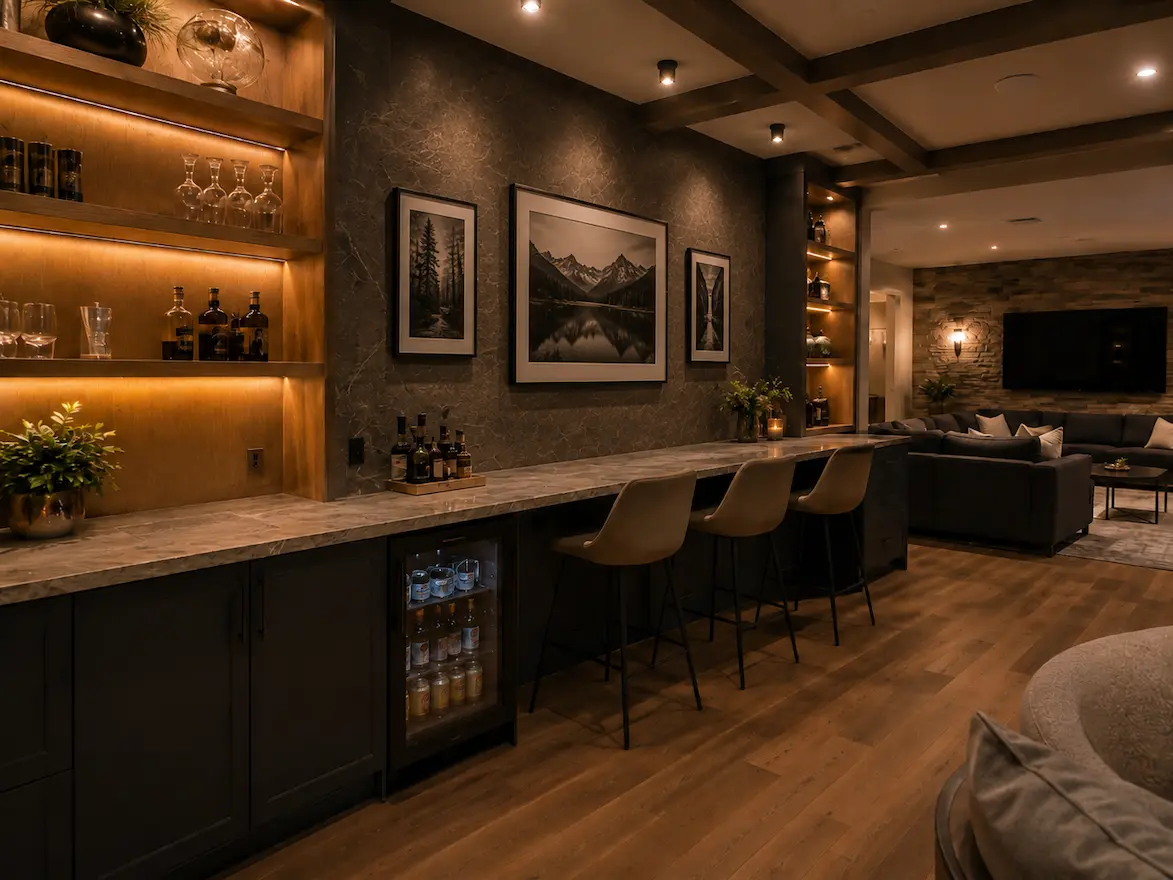
Closed cabinets keep the room calm. Drawers work well for tools, coasters, openers, and small linens. Open shelves can add character when they are used with restraint. A tall cabinet can carry bulkier items, while lower storage near a sink can hide cleanup supplies.
Polish usually comes from the room staying orderly during normal use. A dramatic backsplash may help the design, but storage is what keeps the basement bar from feeling busy every time people use it.
Choose Finishes That Can Handle Real Use
A downstairs bar has to deal with spills, moisture, fingerprints, foot traffic, and guests who may not treat the room as carefully as the homeowner does.
Counters should wipe clean without staining easily. Flooring should handle traffic and occasional spills. Cabinets should fit the look of the basement while holding up to repeated use. Wall finishes near the serving area should be washable enough for real life.
This is where restraint can make the room stronger. A warm cabinet tone, durable counter, textured tile, simple hardware, or clean backsplash can make the space feel finished without making it fragile.
At Amour Remodeling DFW, we like to ask one practical question: will this still look right after five years of normal use? If the answer is no, the material may belong on a moodboard more than in a family basement.
Lighting Changes the Mood Downstairs
Lighting can make or break a basement bar. Basements often have limited natural light, so one ceiling fixture rarely gives the space enough warmth or definition.
Layered lighting works better. Recessed lights can handle general brightness. Pendants can define the bar area. Under-cabinet lighting can make the counter easier to use. Accent lighting can help shelves or a backsplash feel warmer without making the room loud.
The goal is flexibility. Bright enough for setup and cleanup. Soft enough for movie nights, games, or guests.
A basement bar should feel inviting when people walk downstairs, not like a utility corner with nicer cabinets.
Decide Between a Wet Bar and a Dry Bar
Not every bar needs plumbing. A dry setup can work well when the goal is simple storage, serving space, and a beverage station. It often keeps the project simpler because it avoids sink placement, drainage, plumbing lines, and some added planning.
A wet bar makes sense when the basement will be used often for entertaining. A sink helps with rinsing glasses, preparing drinks, cleaning up, and reducing trips upstairs. It can make the room feel more complete, especially when paired with refrigeration and useful counter space.
The right choice depends on use, budget, and existing basement conditions. Plumbing may be worth it in one home and unnecessary in another.
The feature should earn its place. If the family will only use the area lightly, a clean dry bar may be the smarter fit.
Keep the Bar Connected to the Rest of the Basement
A bar should not feel like it was added after everything else was planned. It needs to connect with the media area, lounge space, game zone, guest suite, or bathroom nearby.
That connection comes through scale, materials, lighting, traffic flow, and sightlines. If the basement has a relaxed family feel, the bar should support that. If the room is more refined, the finishes can carry more polish. If the space doubles as a guest area, storage and noise control may matter more.
The bar should also leave room for the rest of the basement to work. A design that crowds the seating area or blocks the path to a bathroom will feel frustrating, even if the finishes are beautiful.
Homeowners thinking through a larger finished-space plan, review Amour Home Remodeling Dallas service page for a broader look at connected interior updates.
Small Basement Bar Areas Need Editing
A small basement bar can feel complete when every inch has a job. It does not need to pretend to be a full pub or second kitchen.
A short cabinet run with a compact beverage fridge, clean counter, closed storage, and good lighting may be enough. Floating shelves can add function without making the wall feel heavy. A mirrored or glossy backsplash can help bounce light in a darker room. A slim counter can serve drinks without crowding the walkway.
Small bars fail when too many ideas compete in too little space. It is better to do fewer things well than to squeeze in seating, shelves, refrigeration, a sink, and décor when the room cannot carry all of it.
A compact setup should feel intentional, not miniature.
Larger Bar Areas Need Zones
A larger basement gives more freedom, but it also creates more ways for the space to feel loose. Without zones, the bar can become a cluttered edge of a big room instead of a clear feature.
Think in layers. A prep zone for serving. A storage zone for bottles and glassware. A seating zone if people will gather at the counter. A cleanup zone if a sink is included. A lighting zone that separates the bar from the rest of the basement without making it feel disconnected.
This planning helps the room support real use. Guests know where to gather. The homeowner has room to serve. The traffic path stays open. The basement feels finished, not just filled.
A larger basement bar can carry more detail, but it still needs discipline.
Build the Feature Around Real Life, Not Just the Reveal
The best bar design is not always the flashiest one. It is the one that feels like it belongs in the home and keeps working after the first round of guests leaves.
It has enough counter space. Enough storage. Lighting that feels right. Finishes that survive spills and fingerprints. A layout that lets people move naturally. A scale that fits the room instead of overwhelming it.
At Amour Remodeling DFW, we see this kind of project as part of a larger remodeling conversation. The bar should support how the basement will be used, how the family hosts, and how the space fits into daily life.
If you are thinking about adding a basement bar and want a planning conversation before the design moves too far, you can start through the Amour Remodeling DFW contact page. A better finished space begins with a clearer plan.
FAQ
What should I plan first for a basement bar?
Start with how the bar will be used: serving, seating, storage, cleanup, entertaining, or everyday family use.
Is a wet bar better than a dry bar?
Not always. A wet bar helps with cleanup, but a dry bar can be simpler and more practical for light use.
What finishes work best for a downstairs bar?
Choose durable counters, easy-clean flooring, moisture-aware materials, washable wall finishes, and cabinet surfaces that handle frequent use.
Can a small bar still feel polished?
Yes. A compact design can feel finished with smart storage, good lighting, clean materials, and a layout that avoids clutter.
Does Amour Remodeling DFW remodel bar areas?
Amour Remodeling DFW can help homeowners plan interior remodeling projects, including bar areas, finished spaces, and connected home updates.